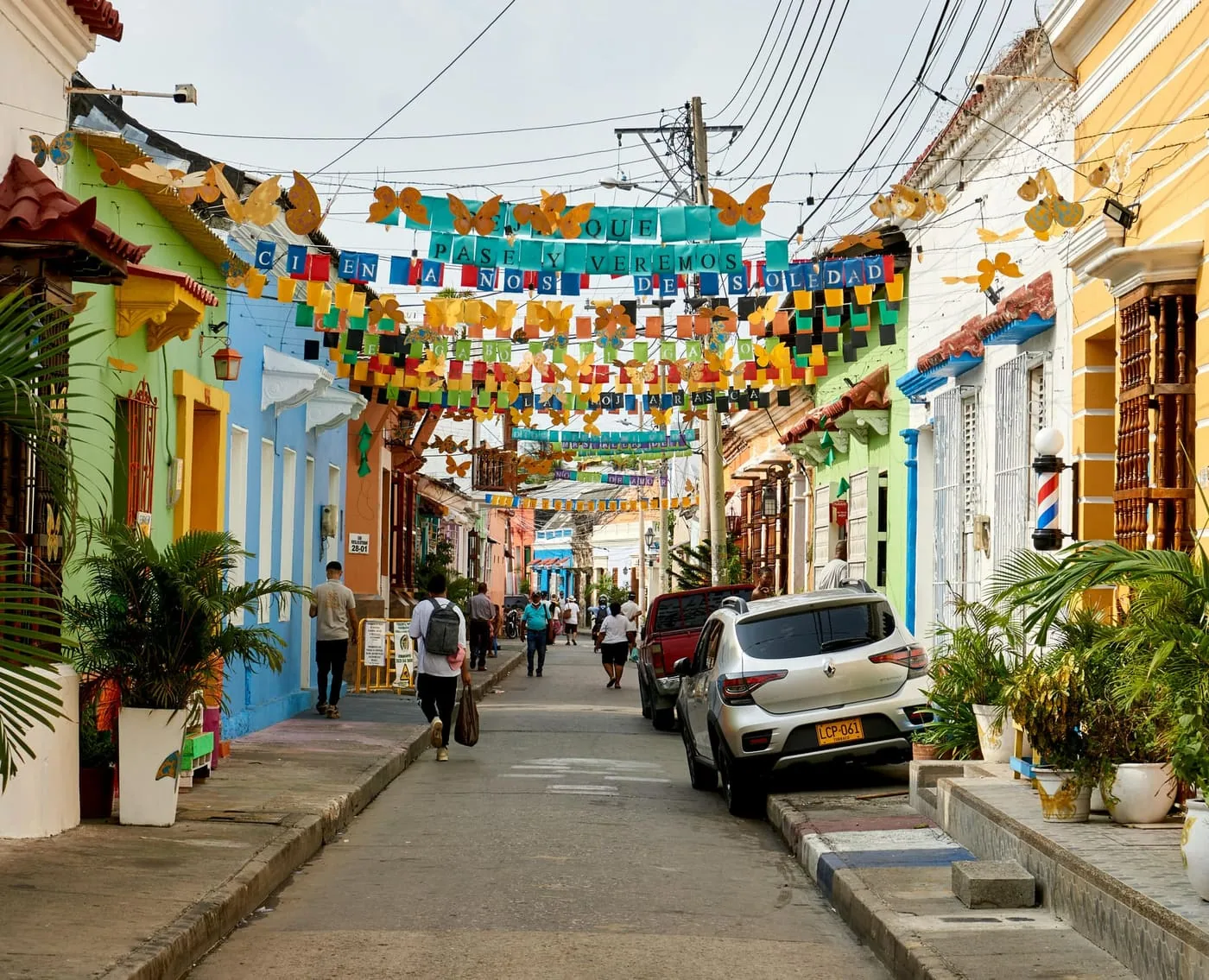
The question we get most before a tourist travels to Cartagena is: "Is it safe?" The honest answer is yes, with some nuance. Cartagena is a well-established tourist destination, with robust security infrastructure in the tourist areas and a rate of violent incidents against tourists significantly lower than other major Colombian cities. But like any city in the world, it requires common sense and basic precautions.
This guide isn't written to alarm you, nor to sell you a flawless postcard. It's written to give you a realistic picture so you can enjoy Cartagena with confidence.
The reality of safety in Cartagena
Cartagena has one of the most developed tourism industries in Colombia, which means there's real, ongoing investment in visitor security. The Centro Historico has surveillance cameras on every corner, a permanent police patrol and a specialized Tourist Police force. Bocagrande and Castillogrande are upscale residential neighborhoods with visible private security.
The most common incidents reported by tourists are phone and accessory theft in high-density areas (public beaches, markets) and scams involving tours or currency exchange. Physical violence against tourists is statistically uncommon in the main tourist areas.
Safe areas and areas to avoid
Highly safe areas for tourists:
- Walled City (Centro Historico): heavy tourist traffic, permanent police presence, well lit.
- Getsemani: Cartagena's artsy neighborhood, very popular with tourists and travelers, safe day and night along its main streets.
- Bocagrande and Castillogrande: modern residential beachfront areas with private security and international hotels.
- El Laguito: exclusive and quiet.
Areas that require extra caution:
- Bazurto Market: bustling and of huge culinary value, but it's best to go with a local or in a group. Keep a close eye on your belongings.
- Outlying neighborhoods away from the tourist area: there's no reason for a tourist to go there, and the risk exposure increases.
- Public beaches at dusk: once the sun goes down, the beaches of Bocagrande become deserted. Avoid staying late.
Golden rule: If a place feels like somewhere you have no reason to be, you're probably right. Stick to the established tourist areas and 95% of potential problems disappear on their own.
The most common thefts: how to avoid them
Phone theft on the beach is the most reported incident among tourists in Cartagena. The most common method: someone approaches to ask you something while another takes advantage of the distraction to grab the phone off your towel. Solution: never leave your phone or keys on the towel when you go into the water. Use a waterproof bag tied to your body, or leave your belongings at the hotel.
On the street, "jaladores" (people who persistently offer tours, crafts or currency exchange) can be annoying but are rarely dangerous. A firm "no, thank you" and continuing to walk is enough. Don't stop to negotiate.
Pirate taxis (without a meter or official identification) are another risk. Always use taxis with a meter, ask your hotel's front desk to call one for you, or use Uber/InDriver, which are completely safe and keep a record of every trip.
Tips for women traveling alone
Cartagena has a Mediterranean-meets-Caribbean culture where catcalling and verbal flirting are part of the everyday landscape. For a woman traveling alone, verbal street harassment can be the biggest inconvenience: frequent and irritating, although it generally doesn't go beyond that in tourist areas.
A few practical tips: walk with a confident pace and avoid prolonged eye contact with strangers on the street. At bars and restaurants, keep your hotel's number or that of someone you trust in your phone's recent calls. Always use Uber or a booked taxi to get back to your hotel at night, never walk alone on quiet streets.
Many women travelers report that going with a local guide like Nohemi completely changes their experience of the city: harassment disappears, you get access to more authentic places, and you travel with the confidence of someone who knows every corner.
Safety on tours and excursions
The risk with tours isn't just about pirate boats (which we covered in another article). There's also the risk of booking through middlemen who have no real control over the quality of the service they deliver.
For boat tours, the rule is to always book directly with a certified operator, verify safety documentation, and avoid paying 100% upfront to operators you don't know. Our fleet holds all current permits and the booking process is transparent from the very first message.
Frequently Asked Questions
Is it safe to visit Cartagena?
Yes. It's one of the safest destinations in Colombia for tourists. Tourist areas have a permanent police presence and a low rate of violence against visitors.
Can I go out at night?
Yes, in the Walled City and Bocagrande. Go in a group, use booked transportation to get back, and avoid dark alleys.
Is Cartagena safe for women traveling alone?
Comparatively, yes. Verbal harassment exists but physical violence is uncommon in tourist areas. Traveling with a local female guide changes the experience.
What do I do if something gets stolen?
File a report with the National Police or the nearest CAI (police station). Save your country's consulate number before you travel. For travel insurance purposes, a police report is essential.