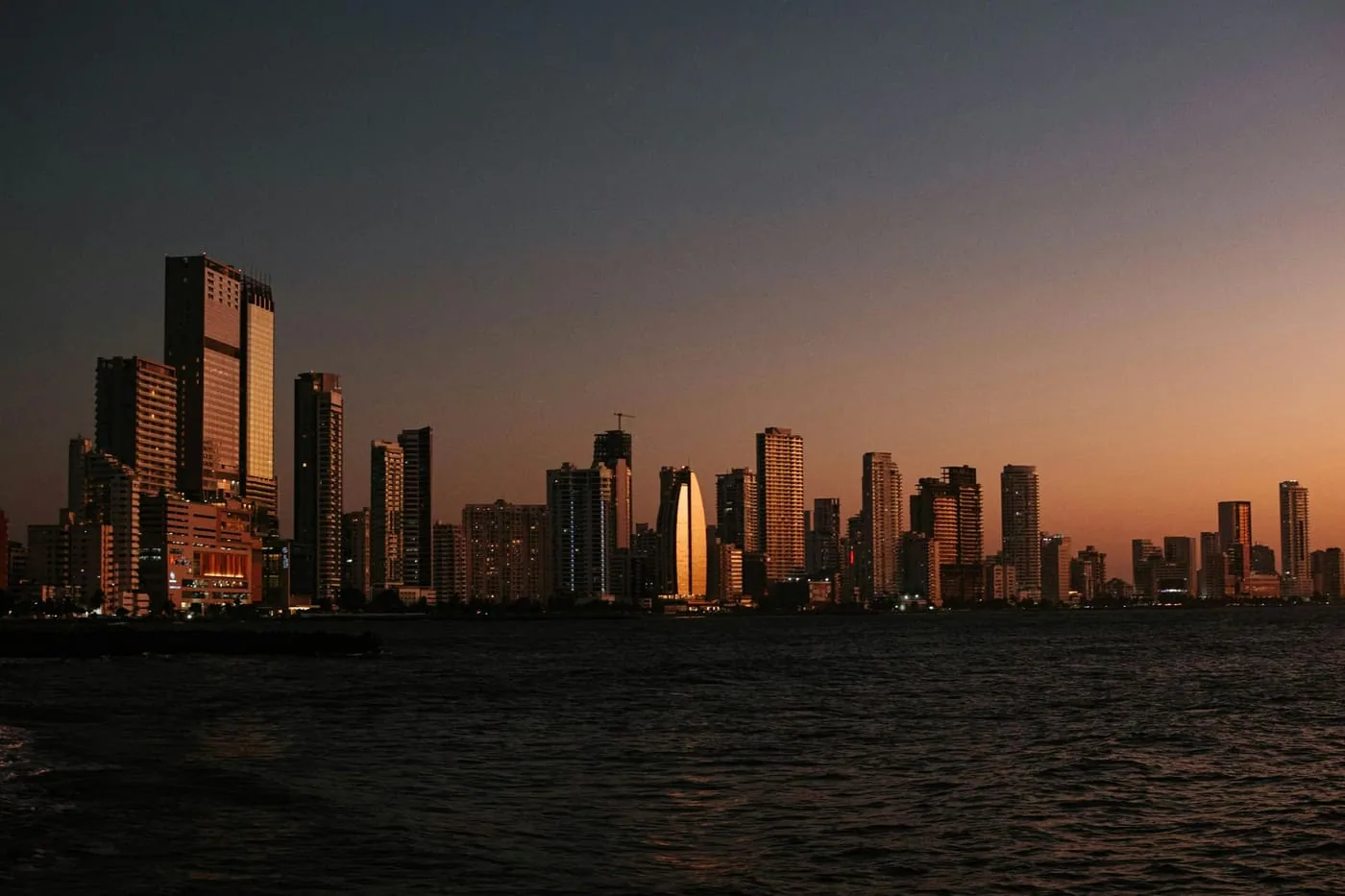
Cartagena de Indias has one of the most valuable resources a Caribbean destination can offer for kitesurfing: consistent wind, relatively flat water in the practice areas, water temperatures of 27-29°C (81-84°F) year-round, and spots with different characteristics for every level. It's no coincidence it has become one of the most important kitesurf destinations in South America.
Why Cartagena is perfect for kitesurfing
The geography of northern Colombia creates exceptional weather conditions for wind sports. The trade winds from the north that sweep across the Caribbean reach the Colombian coast between December and April with a consistency and strength that few destinations on the continent can match. In Cartagena, this combines with shallow-water areas ideal for learning and beaches with enough room to maneuver safely.
On top of that, the warm water temperature (never below 26°C/79°F) makes practice sessions more comfortable and longer. No thick wetsuits, no cold, no ending a session because of hypothermia. Just you, the wind, and the Caribbean.
The best kitesurf spots near Cartagena
Manzanillo del Mar: The main kitesurf spot in the Cartagena area. Located about 20 kilometers north of the city, on the Caribbean Sea. It has a protected flat-water lagoon, perfect for learning and practicing, and access to open sea for more advanced kitesurfers. The wind here comes straight from the north with no obstacles.
La Boquilla: A natural lagoon at the northern entrance to Cartagena, with very flat, shallow water. Ideal for beginners in the early stages of learning (kite control on land and in the water without a board). Easy access from the city.
Barú: The largest island in the area, with more variable winds but extraordinary scenery. Recommended for intermediate and advanced riders who want to sail with a spectacular view.
Tip: For your first days of learning, Manzanillo del Mar offers the best combination of consistent wind and protected flat water. For advanced sessions with waves, La Boquilla and the open areas of Barú offer more technical possibilities.
The seasons: when to go
Kitesurfing in Cartagena has two main seasonal windows:
- December to April (main season): The northern trade winds blow consistently at 15-25 knots. January, February, and March are the most reliable months. This is high season for kitesurfing along the entire northern Colombian coast.
- July to August: A secondary window with moderate winds of 12-18 knots. Less consistent than the main season but good enough to practice.
In May, June, September, October, and November the wind is scarce or irregular. You can still travel, but there's no guarantee of kitesurf conditions. If kitesurfing is the main goal of your trip, choose December-March.
Course levels: from zero to advanced
Level 1 — Beginner (6-9 hours): Wind theory and safety, handling a small trainer kite, controlling the power kite on land and in the water, body dragging (being pulled through the water by the kite without a board). By the end of this level, you understand the physics of kitesurfing and can control the kite safely.
Level 2 — Waterstart (3-6 hours): Your first time standing on the board. You'll learn to get up out of the water, stay on the board, and complete your first ride. This is the most exciting moment in the learning process.
Level 3 — Independent riding: Changing direction, controlling speed, self-rescue, riding in different wind conditions. By the end of this level you're an independent kitesurfer.
Advanced: Jumps, tricks, wave riding, foiling. For those who already ride independently and want to take their level to the next stage.
Equipment: what do you need?
In our courses, all equipment is included: training kite, control bar, beginner board, buoyancy vest, helmet, and instructor-student radio. You only need a swimsuit, sunscreen, and the will to learn.
If you already have experience and want to rent equipment to practice independently, we offer hourly rentals with a briefing on the day's conditions beforehand. Kitesurf gear costs between $1,500 and $3,000 USD new, but you don't need to invest in your own equipment to get started.
Kitesurf safety: what you should know
Kitesurfing has a reputation as a dangerous sport, and in untrained hands it can be. With proper instruction, the risks drop dramatically. That's why we never let anyone go out on the water without completing the land-based safety and control phase.
The basic safety rules: never practice kitesurfing without prior instruction, always wear a vest and helmet during the learning phases, never practice alone, and respect swimming areas and the presence of other people in the water.
Frequently asked questions
From what age can you learn?
From ages 12-14 (with parental authorization and a minimum weight of 40 kg). There's no maximum age.
How many days to learn from scratch?
Between 9 and 12 hours of effective instruction, equivalent to 3-4 days of lessons.
Which months have the most wind?
December to April (main season). January-March are the most consistent, with 15-25 knots.
Does it include equipment?
Yes, all courses include kite, board, vest, helmet, and radio. You just bring a swimsuit and sunscreen.