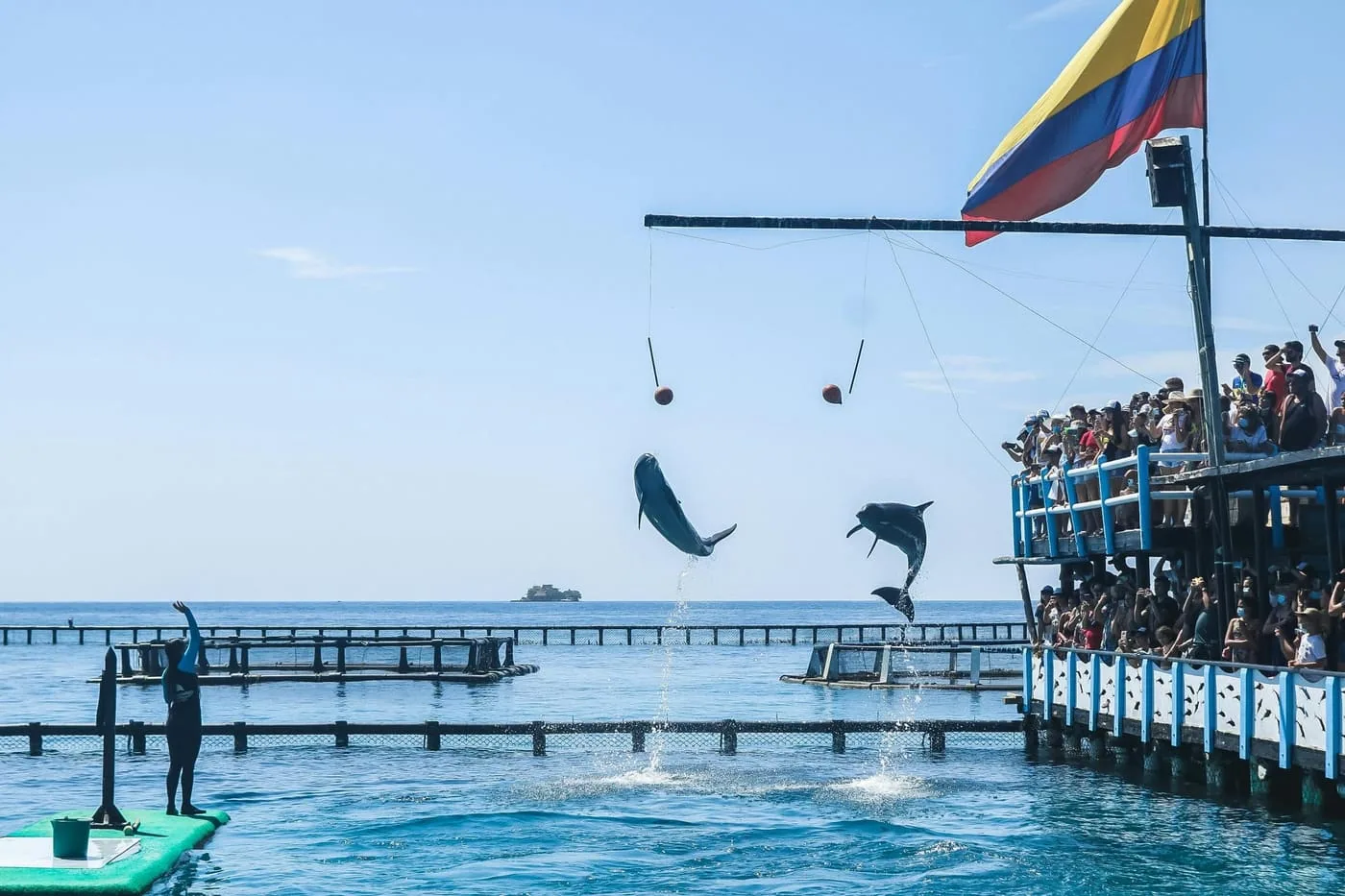
45 kilometers from Cartagena, right in the Colombian Caribbean Sea, lies an archipelago of 27 islands and islets that holds some of the most biodiverse coral reefs in the Western Hemisphere. The Corales del Rosario National Natural Park is, simply put, Colombia's most spectacular beach destination and one of the best in the Caribbean.
But the Rosario Islands are not all alike. Each one has its own character, its own atmosphere, and its own particular attractions. This guide helps you choose which islands to visit based on what you're looking for.
The Corales del Rosario National Natural Park
The Rosario Islands are part of the Corales del Rosario y San Bernardo National Natural Park, declared a protected area in 1977. The park covers more than 120,000 hectares of marine and land waters with one of the most important coral reef ecosystems in the Colombian Caribbean.
The park's waters are home to more than 50 species of coral, 26 species of sponges, and a diversity of tropical fish, rays, sea turtles, and dolphins that make it one of the best snorkeling and diving destinations in Colombia. Underwater visibility can reach 15 meters during the dry season.
Isla Grande: authentic nature and snorkeling
The largest island in the archipelago and, perhaps, the most authentic. Isla Grande has local fishing communities who have lived on these keys for generations, dense mangrove forests that protect the coast, and some of the best snorkeling spots in the park. There are no big hotels or massive resorts, which gives it a genuine character that many Caribbean islands have lost.
The beaches of Isla Grande are more natural and less crowded than those of the more touristy islands. Snorkeling here is exceptional: you can see coral in very good condition at just 3-4 meters of depth.
Isla Múcura: postcard paradise
Isla Múcura is probably the image you have in your head when you think of a "Caribbean beach": ultra-fine white sand, transparent turquoise water, palm trees leaning toward the sea, and a silence broken only by the sound of the waves. It's the most photogenic island in the archipelago and the one with most of the Rosario's boutique hotels and eco-lodges.
If your goal is a night or two on the islands in a cabin over the water, with private snorkeling and breakfast included, Isla Múcura is your destination. Prices per night range from $400,000 to $1,200,000 COP depending on the accommodation and the season.
Playa Blanca (Barú): Colombia's most famous beach
Technically, Playa Blanca is on Isla de Barú, connected to the mainland by land, although it's more easily reached by sea. It's probably the most photographed beach in Colombia: a strip of fine white sand almost 3 kilometers long with water in a turquoise blue that looks almost unreal.
Popularity comes at a price: Playa Blanca can get very crowded during high season (December-January and July-August), with street vendors, music, and plenty of activity. For those seeking quiet, going on a weekday outside of high season makes all the difference.
Nohemi's tip: Arrive at Playa Blanca before 10 AM to find the beach less crowded and the water calmer. After noon, the shared boats have dropped off all their passengers and the beach fills up.
The San Martín de Pajarales Aquarium
The Rosario Islands Aquarium is one of the park's most popular attractions, especially with families and kids. It has open-air pools with reef sharks, manta rays, sea turtles, barracudas, and dozens of species of tropical fish in their natural habitat.
The main attraction is "swimming with sharks": for an additional cost, you can enter the main pool with nurse sharks, a species completely harmless to humans. It's an experience kids (and many adults) remember forever. Admission to the aquarium costs around $30,000-$40,000 COP per person.
Snorkeling and diving: what to expect
Snorkeling in the Rosario Islands is accessible to everyone — no previous experience needed. The most recommended areas for surface snorkeling are shallow (2-5 meters) and have an extraordinary density of marine life: parrotfish, angelfish, clownfish, starfish, and corals in multiple colors.
For scuba diving, the islands have several certified diving operators offering discovery dives (a first guided dive for beginners) and advanced dives. The most notable dive sites have coral walls at 15-20 meters of depth with exceptional visibility.
How to get to the Rosario Islands
There are two main options from Cartagena:
- Shared boats: Leave from the Bodeguita pier in the Centro Histórico. They run on fixed schedules, go out full, and make multiple stops. Price: $60,000-$80,000 COP round trip per person. The cheapest option, but the least flexible.
- Private boat with Agencia Nohemi: The Sunny Day Trip includes a private boat just for your group, snorkeling gear, a seafood lunch at a stilt-house eatery, and beach time. You set the schedule and don't share the boat with strangers.
The trip from Cartagena takes between 45 minutes (fast boats) and 1.5 hours (slower boats) depending on the specific destination within the archipelago.
When to go? The best seasons
The dry season (December-March) is the best time to visit the islands: calm sea, blue sky, optimal underwater visibility, and less risk of rain ruining the day. The July-August season is also good, though with somewhat more tourist activity.
The rainy season (May-October) has spectacular days, but also days with rough seas and heavy rain. If you travel during that time, have a backup plan and make sure the operator monitors weather conditions before departure.
Frequently asked questions
How much time do I need for the islands?
An 8-10 hour day trip is enough for 1-2 islands, snorkeling, and lunch. To explore more, you'll need 2-3 days with accommodation on the islands.
Do I need to know how to swim?
Not for basic snorkeling in shallow areas with a life jacket. In open sea it's recommended. All boats carry life jackets for everyone.
When is the best time to go?
December-March: calm sea, clear sky, exceptional underwater visibility. July-August is also good. Avoid May-June if possible.
Can I stay overnight on the islands?
Yes, Isla Múcura and Isla Grande have eco-lodges and cabins. Prices range from $400,000 to $1,200,000 COP per night depending on the type of accommodation.