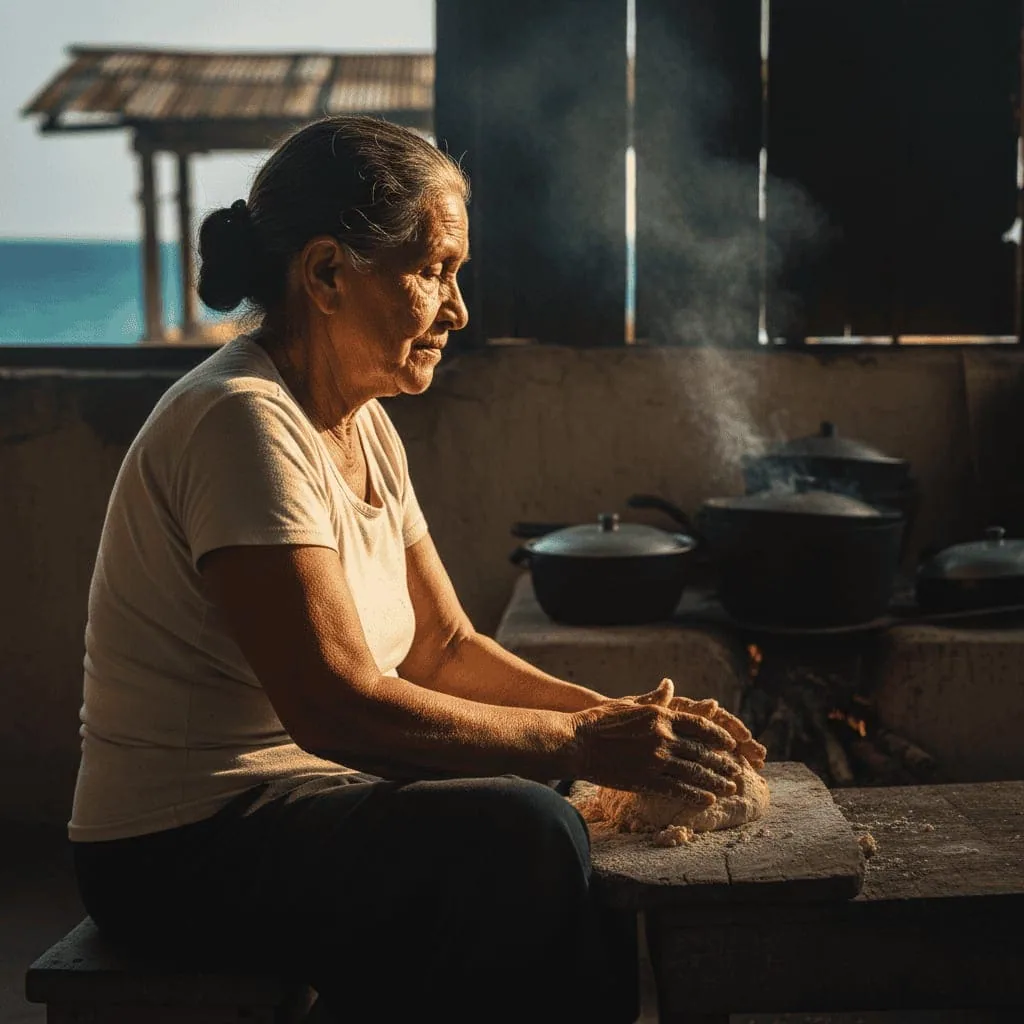
Colombian Caribbean cuisine isn't a variation on the country's national food — it's a world of its own. While the interior of the country simmers slowly with beef broths and ajiaco, the Caribbean Coast moves to the rhythm of coconut, plantain, seafood, and tropical herbs that no one else uses quite the same way.
Eating in Cartagena without exploring its local cuisine is like going to Paris and eating at McDonald's. This guide takes you through the flavors that define the Colombian Caribbean and tells you exactly where to find them.
The roots of Colombian Caribbean cuisine
Colombian Caribbean gastronomy is the result of three centuries of cultural blending. The indigenous Calamari and Zenú peoples contributed corn, cassava, plantain, and smoking techniques. African slaves brought during the colonial era introduced coconut as a key ingredient, deep-frying in hot oil, and the use of plantain in dozens of preparations. The Spanish brought pork, rice, and European spices.
The result is a generous, flavorful, unpretentious cuisine that's eaten with your hands, shared as a family, and made with ingredients that the land and the sea provide.
Coconut rice: the crown jewel
If you have to choose just one dish to understand coastal cuisine, it's coconut rice. This isn't rice with coconut milk stirred in at the end. The process starts from scratch: fresh coconut is grated and squeezed to extract its milk, and that milk is cooked until the coconut's natural oil starts to separate out. That golden oil is where the rice is toasted before the water goes in. The result is rice with a deep, slightly sweet flavor and an aroma that fills the whole kitchen.
Served with fresh seafood — shrimp, squid, prawns, mussels — coconut rice with seafood is Cartagena's most iconic dish. A full lunch at a local restaurant costs between $35,000 and $70,000 COP.
Fish sancocho: soup for the soul
On the Caribbean Coast, sancocho is medicine and celebration at the same time. The fish version is the most typical in Cartagena: a hearty soup with generous chunks of red snapper or kingfish, cassava, yam, creole potato, green plantain, and a sofrito of onion, garlic, cilantro, and scallion that perfumes the broth until it's irresistible.
It's served with white rice on the side and avocado. Eating it at a neighborhood restaurant at noon, with a coconut lemonade, is one of the most authentic experiences you can have in Cartagena. Price: $20,000 – $35,000 COP.
Where to eat it: Look for "corrientazos," or set-menu lunch spots, in the neighborhoods of Getsemaní, Manga, and the Bazurto Market. These are unpretentious places with top-quality food made by local cooks who've spent decades perfecting their sancocho.
Patacones: the bread of the Caribbean
Green plantain, fried, smashed, and fried again until crispy and golden: that's a patacón. In Cartagena it's eaten as a side to almost everything, but it's also a star in its own right: patacones with hogao (a slow-cooked tomato and onion sauce) and costeño cheese make a perfect appetizer that also works as a street snack.
In the Walled City, several street stalls sell them fresh for $3,000 – $5,000 COP each. Hot, crispy, and generously topped with hogao, they're one of the best snacks in the world.
Carimañola: the perfect bite
A carimañola is a cylinder of cassava dough filled with ground beef or cheese, breaded and fried until golden on the outside and creamy on the inside. It's the favorite breakfast of cartageneros, the snack at the soccer game, and the thing you buy at the neighborhood bakery at 7 in the morning.
If you want to really understand coastal cuisine, have a carimañola with strong black coastal coffee (espresso with panela) at one of the small cafés in the historic center for breakfast. It's the most authentic breakfast and costs less than $10,000 COP.
Mote de queso: the proud coastal secret
Almost no one outside the Caribbean Coast knows about it, but in Cartagena mote de queso is a Sunday and celebration dish. It's a thick soup made with ñame (a tropical tuber) and melted costeño cheese, with a base sofrito of onion and garlic. The texture is creamy, the flavor is deep and salty, and it's eaten with white rice on the side.
It's one of the most representative dishes of the indigenous-African-Spanish cuisine that defines the Colombian Caribbean. If you see it on a neighborhood restaurant's menu, order it without hesitation.
Tropical juices: the most refreshing drink in the Caribbean
Cartagena has an average temperature of 30°C (86°F). The local antidote is fresh juice from tropical fruits that only grow at this latitude. Corozo (a wild palm fruit with a tart, refreshing berry), creamy guanábana, green mango with salt and lime, passion fruit, and coastal lime are the favorites.
In markets and fruit stands they sell for $4,000 – $8,000 COP. Bottled supermarket juices don't come anywhere close to the flavor of one freshly blended with the fruit of the day.
The food experience with Nohemi
Our takes travelers to the places where locals really eat: market stalls, home kitchens in Getsemaní, juice bars downtown, and palafito eateries on the islands. It's not a tour of tourist restaurants. It's a real immersion into Cartagena's food, guided by someone who's been eating it her whole life.
Frequently asked questions
What is the most typical dish of Cartagena?
Coconut rice with seafood. Fish sancocho, patacones with hogao, and carimañola are also emblematic of Cartagena's cuisine.
Is coastal food spicy?
Generally not. It uses sweet peppers and aromatic herbs, but without the heat of other Latin American cuisines. You can eat without worry.
Where can I eat authentic, affordable food?
The Bazurto Market, the corrientazos of Getsemaní, and the squares of the historic center around midday. Avoid places with English menus posted at the door.
Are there vegetarian options?
Yes. Dishes based on cassava, plantain, ñame, and rice are naturally vegetarian. Juices, patacones, and cheese carimañolas are also perfect options.