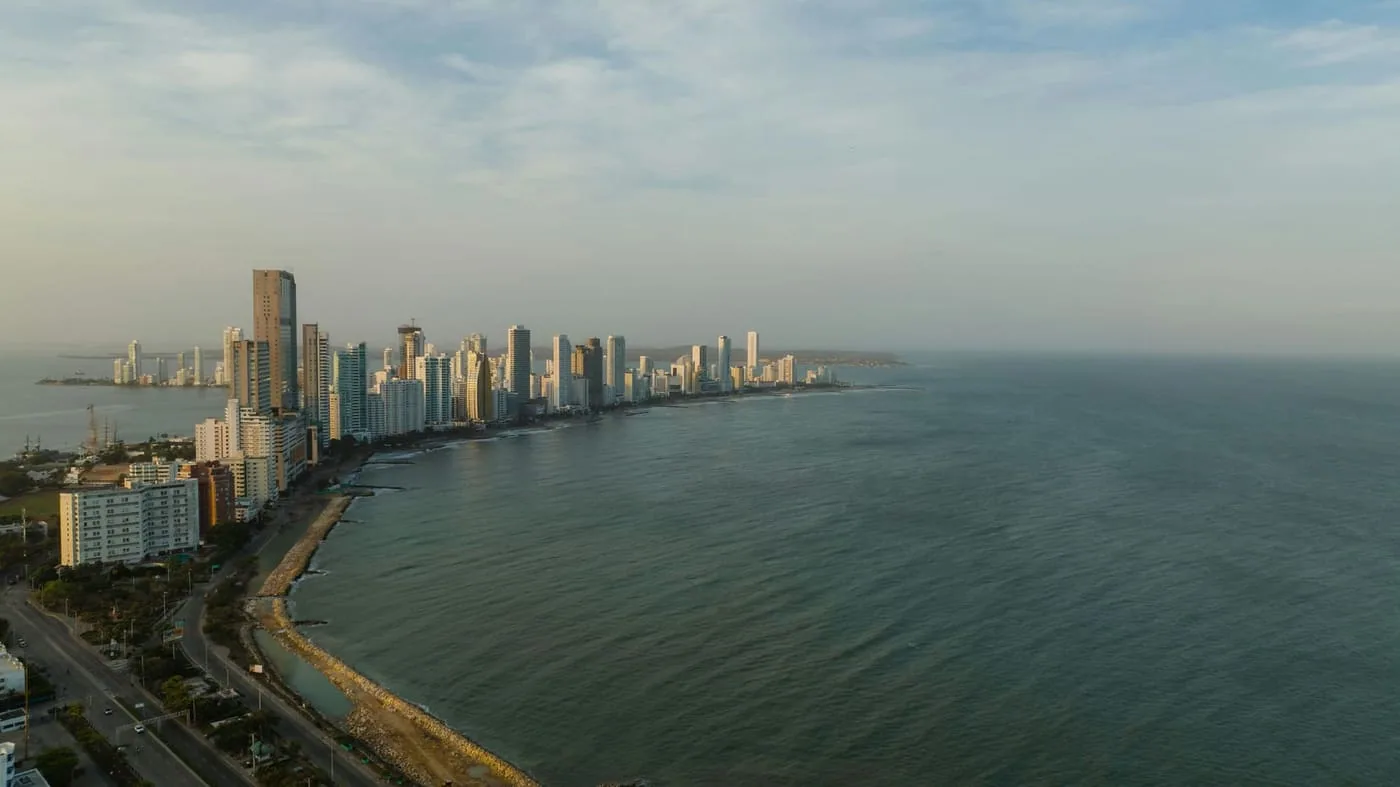
If you're planning your next Caribbean vacation from the US, Cancún has probably been on your shortlist. But every year more travelers discover Cartagena de Indias, Colombia: a 500-year-old walled city, postcard-worthy islands an hour away by boat, and prices that go a lot further. Here's a point-by-point comparison so you can decide with real information.
Prices: where does your money go further?
In Cancún and the Riviera Maya, a mid-range beachfront hotel can run USD 100-200 per night, and eating outside your resort (especially in the hotel zone) gets expensive fast. In Cartagena, a comfortable boutique hotel in the Centro Histórico or Bocagrande costs roughly USD 55-120 per night, and a full lunch at a neighborhood restaurant runs around USD 8-15 per person.
- Accommodation: Cartagena is usually 20-35% cheaper than Cancún in comparable categories.
- Food: eating where locals eat in Cartagena costs a fraction of what you'd pay in Cancún's hotel zone.
- Tours and excursions: a full day on a private boat to the Rosario Islands, split among a group, often works out cheaper per person than a large-group catamaran to Isla Mujeres.
Useful tip: at Dunas & Olas we show every price in COP, USD and MXN with our currency converter, so you know exactly what you'll pay before booking. Check out our complete Cartagena budget guide.
Beaches: white sand and turquoise water vs. bay views and offshore islands
Cancún has spectacular white-sand beaches and turquoise water right outside your hotel. Cartagena's urban bay isn't its main beach draw — but in exchange it offers something Cancún doesn't: the Rosario Islands, an archipelago of emerald waters 45-60 minutes away by boat, with white sand, coral reefs and far less mass tourism than Isla Mujeres or Cozumel.
The key difference is logistics: in Cancún you walk to the beach; in Cartagena you book a boat (private or shared) to reach beaches that are just as good or better, which also means a more exclusive, less crowded experience.
Culture, history and authenticity
This is where Cartagena wins by a landslide. The Centro Histórico is a 16th-century walled city, a UNESCO World Heritage Site, with cobblestone streets, flower-covered balconies, colonial plazas and ramparts where you can watch the sunset over the Caribbean Sea. Cancún, by comparison, is a modern resort city built in the 1970s specifically for beach tourism; its genuine Maya heritage sites (Chichén Itzá, Tulum) are 1-3 hours away.
If your idea of "Caribbean" includes walking streets with 500 years of history, taking photos in colorful colonial plazas, and dining in restored colonial houses turned restaurants, Cartagena will surprise you.
Nightlife and food
Cancún means large-scale clubs, all-inclusive resorts and big nightlife, especially in the hotel zone. Cartagena offers a more bohemian, varied nightlife scene: live-music bars in Getsemaní, rooftop terraces overlooking the bay, and a food scene that blends Caribbean, international and contemporary cuisine at prices well below Mexico's tourist zones.
Cartagena's cuisine has strong Afro-Caribbean roots: fried fish with coconut rice, arepas de huevo, ceviches and tropical fruit you've probably never tried. If this interests you, check out our guide to Cartagena's food scene.
Safety for travelers
Both destinations welcome millions of tourists a year and have well-patrolled tourist areas. In Cartagena, as in any major Latin American city (including Cancún or Mexico City), common sense applies: don't flash valuables, use reliable transportation at night, and stick to well-known tourist areas like Bocagrande, the Centro Histórico, Getsemaní and Manga.
Recommendation: read our full Cartagena safety guide before you travel, with practical tips by neighborhood.
How to get there from the US
There currently aren't many frequent direct flights between major US cities and Cartagena, so most travelers connect through Bogotá, Panama City or Miami. Common routes include:
- Miami - Cartagena (direct): several airlines run this route directly, usually under 3 hours.
- New York / other cities - Bogotá or Panama - Cartagena: total travel time is usually 6-9 hours with one stop.
- Book ahead: international fares to Colombia tend to be lower when booked 6-10 weeks in advance.
So, Cartagena or Cancún?
If you want an all-inclusive resort right on a postcard beach without moving much, Cancún is still a great option. But if you want a more authentic experience, a UNESCO World Heritage colonial city, real Caribbean cuisine, and the chance to combine city exploration with a full day on a private boat to paradise islands — all while paying noticeably less — Cartagena de Indias is the answer.
Frequently asked questions
Is it cheaper to travel to Cartagena than to Cancún?
Generally yes. Accommodation, local food and private tours are usually 20-40% cheaper than in Cancún, especially if you skip the hotel zone and eat where locals eat.
Do US travelers need a visa for Cartagena?
No. US citizens don't need a visa for stays up to 90 days, but must complete the online Check-Mig form before traveling. See our 2026 requirements guide.
Cartagena or Cancún for a honeymoon?
Both work great, but Cartagena offers a walkable colonial city, sailboat sunsets, and a full day on a private boat to the Rosario Islands at more accessible prices.